What's Actually in the Bowl
The ingredients are one layer.
The ingredients are one layer.
The pho in front of you in Hanoi is not Vietnamese the way most people mean Vietnamese. The broth technique came south with Chinese migration. The baguette on the side is French colonialism, still showing up at the table a century later. The herbs are older than any of it — growing in the Mekong Delta long before any empire had a name for the place.
Nobody tells you this when they hand you the bowl. But it's all in there.
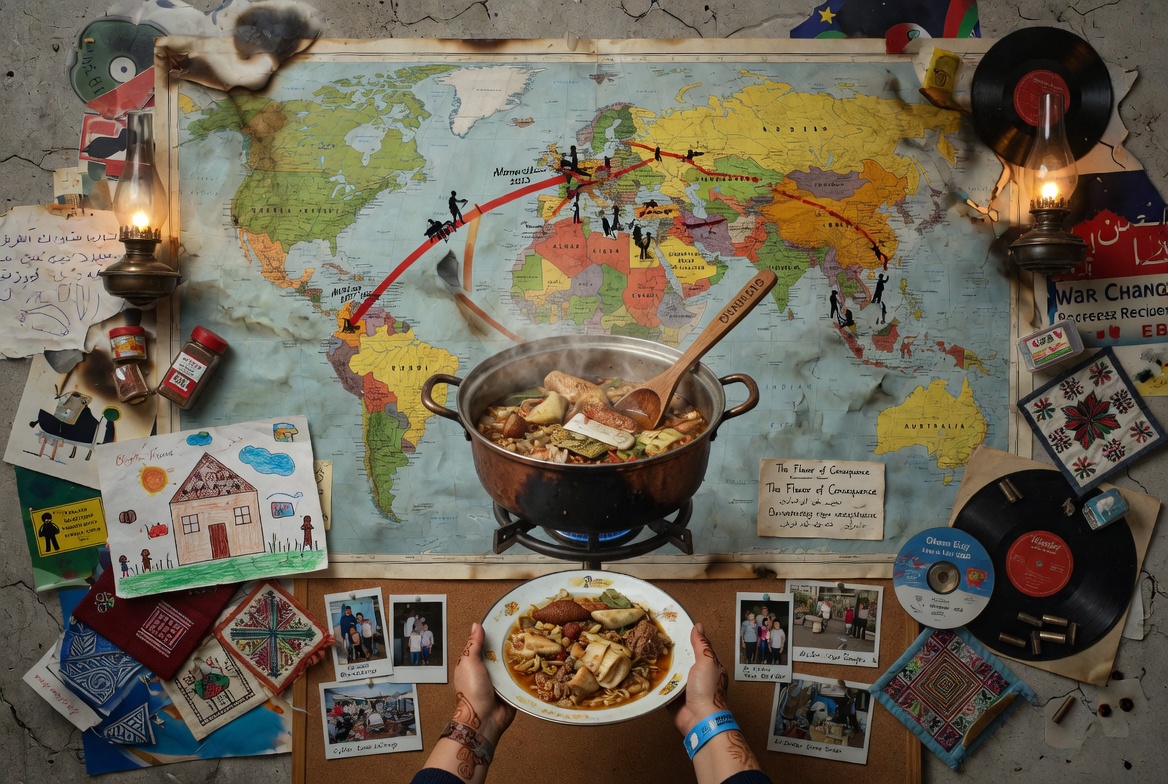
This is what food actually is, if you're paying attention. Not fuel. Not even culture, exactly — more like a living record of everything that passed through: trade routes, conquests, diasporas, a grandmother who refused to let one particular thing be forgotten. Every dish is an argument about identity, made with heat and time instead of words.
I've spent enough years in kitchens to know that the most interesting question you can ask about any ingredient is not what it is — it's where it actually came from. The answer is almost never what you expect.
The spice routes never ended
Saffron in Spanish paella. Tamarind in Mexican salsas. Chili peppers in Thai curries. None of these ingredients originated where we now consider them most at home. They arrived—through trade, through force, through people carrying seeds across water because it was the one thing they could take with them.
This is the Origins problem in its most literal form: the thing you think of as native, as authentic, as from here — usually isn't. Or rather, it is now, because enough time passed and enough hands worked with it that it became something new in that place. That transformation is the culture. The arrival and the adaptation, not the purity.
When you sit down to eat something traditional abroad, you're not eating a fixed, ancient thing. You're eating the latest version of a very long conversation.
How people eat is the real text
The ingredients are one layer. The ritual is another.
In Ethiopia, injera is both plate and utensil, and the meal comes from a shared platter — eating alone from it would be a kind of statement, and not a good one. In Japan, a bento box is arranged with a precision that has nothing to do with appetite and everything to do with an aesthetic philosophy about balance and season. In Georgia — the country — a supra feast can run for hours, governed by a tamada, a toastmaster, who guides the table through toasts that move between history, poetry, and gratitude in a way that would make most dinner parties feel like waiting rooms.
What a culture puts on the table tells you something. How they sit around it tells you more.
Eating as fieldwork
The most useful thing I ever did as someone trying to understand a place was stop eating at restaurants designed for people like me. Street markets, family kitchens, the spots with plastic stools and no English on the menu — that's where the actual conversation is happening.
A few things worth doing if you want to eat like someone who's actually curious:
Ask where a dish comes from. Not the restaurant—the dish. Which region, which season, which family. The question alone signals something, and people respond to it.
Notice what's absent. Food taboos and missing ingredients are as revealing as what's celebrated. The absence of beef, pork, or certain seafood is a compressed history of religion, ecology, and memory. The gap is part of the story.
Eat what's in season. Local menus shift with the harvest. That shift connects you to the actual rhythm of a place in a way no itinerary can manufacture.
What's disappearing
The urgent thing that culinary anthropology keeps surfacing is this: these traditions are not stable. Globalization, industrial agriculture, and urbanization are erasing regional flavors that took centuries to develop. In a lot of places, the last keeper of a recipe is in their eighties and never wrote it down.
When you seek out traditional food on the road — when you sit down at the small place, buy from the farmer at the market, take the cooking class with the actual family — you're not just having an experience. You're participating in whether that thing continues to exist.
That's not a small thing.
Start with the meal
Before you plan the museums, plan the meals. Find out what the region grows. Look for a market day. Follow your appetite somewhere you wouldn't have found otherwise.
The most clarifying moments I've had in a new place didn't happen at landmarks. They happened when someone handed me something they made—and in doing so, handed me a piece of how they understood the world.
The bowl is always the beginning. The question is whether you're paying attention to what's actually in it.