The Pink Lotus
Twelve years, several failed attempts, and finally one flower.
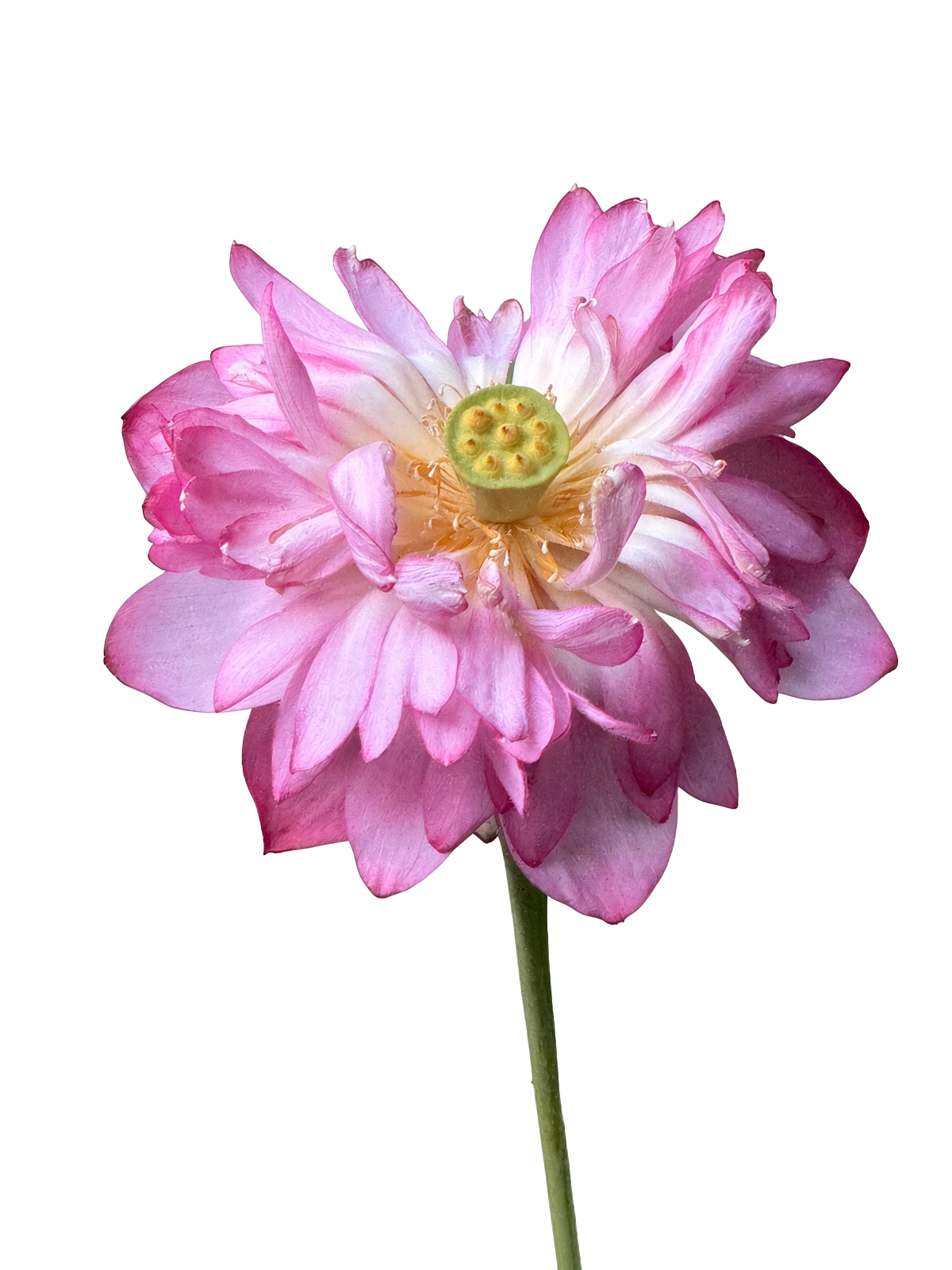
I had been trying to grow lotus in this pond for nearly twelve years. Man, did I try.
They never lasted. Sometimes they sat too deep in the water. Sometimes too shallow. The movement of water in the pond was too strong, the winters too cold, or some other small condition simply wasn’t right. After enough attempts, I eventually gave up.
Which was unfortunate, because I have always loved them.
I had seen lotus growing in fountains and gardens while traveling—particularly in Spain, but also in Morocco and Turkey—and in botanical gardens, including Butchart Gardens. There was something almost improbable about them: these enormous leaves rising from the water and then, somehow, these immaculate flowers appearing above them.
When we rebuilt the pond, we installed a much better filtration system and created a quiet little shelf tucked away from the stronger moving water. We decided to try once more.
And this time, they grew.
Six buds appeared.
Then something began eating them.
The first few developed holes before we realized what was happening. Eventually we found the culprit while munching on one of the buds and treated the remaining growth. The damage stopped.
And after more than a decade of trying, one morning there she was: the very first lotus. In all her glory.
Now, winter will come. So let's see how she weathers it.
Growing a Lotus
Lotus (Nelumbo nucifera) is an aquatic perennial native across parts of Asia and valued for thousands of years as both an ornamental and useful plant. It grows from rhizomes planted in heavy soil beneath shallow, relatively still water and performs best with abundant sun and warmth.
In a pond, placement can matter as much as almost anything else. A protected shelf gives the plant a stable depth and keeps young leaves and buds away from strong currents. Once growth begins, inspect new leaves and flower buds regularly for insects—the tender growth can disappear surprisingly quickly.
In colder climates, the rhizome can survive winter if it remains below the portion of the pond that freezes.