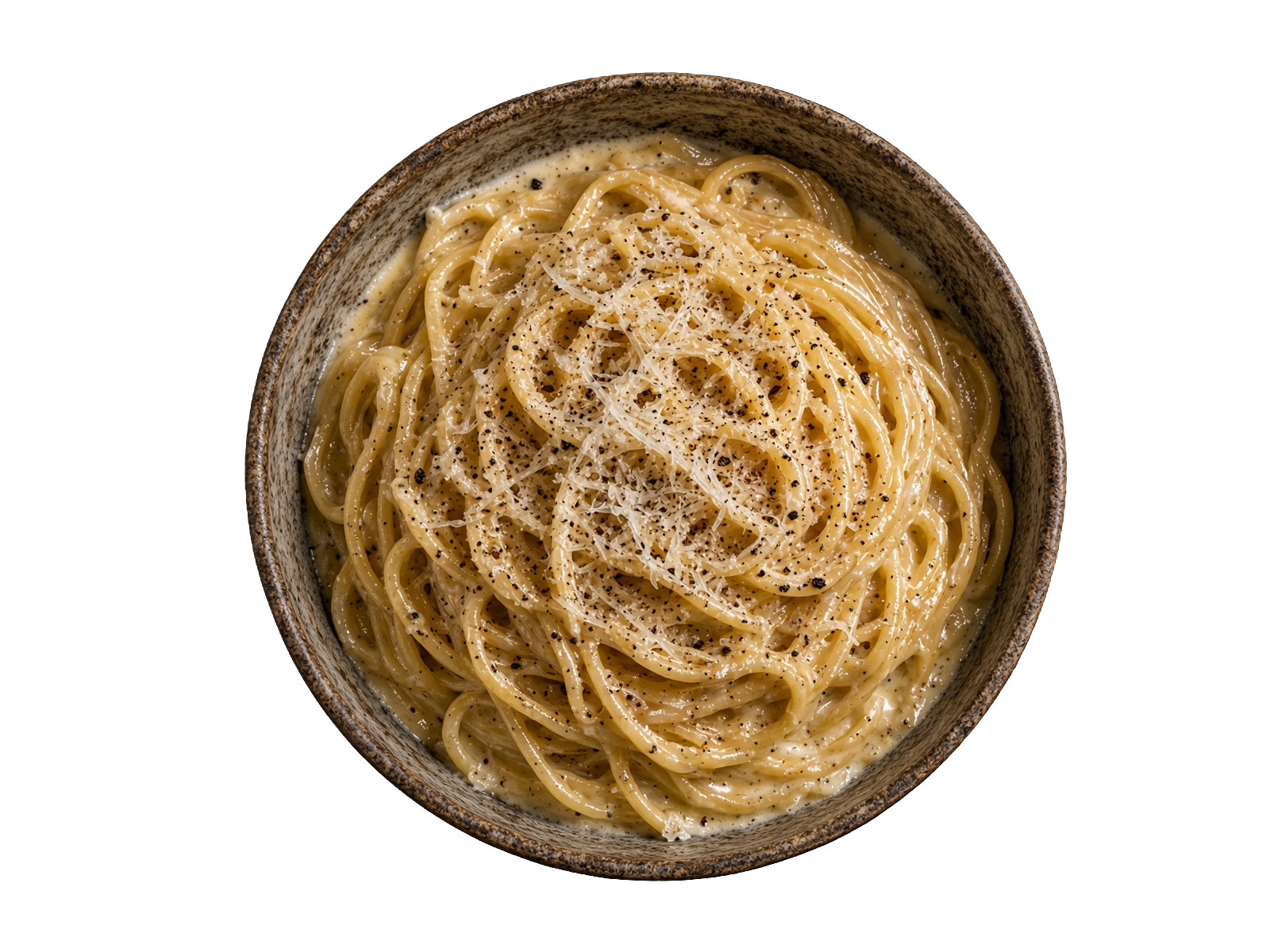
Saffron Cacio e Pepe
Prep (minutes)
10
Cook (minutes)
15
Total Time (hours)
0.4
Temperature
Stovetop, served hot
Yield (servings)
4 servings
Ingredients
Pasta
- 400 g (14 oz) tonnarelli or spaghetti
- Kosher salt, about half what you’d normally use for pasta water
Sauce
- A generous pinch of saffron threads (about ¼ tsp), lightly crushed
- 2 tsp whole black peppercorns
- 200 g (7 oz) Pecorino Romano, very finely grated on a microplane, plus more to serve
To finish
- Smoked Spanish paprika (pimientón de la Vera, sweet)
Method
- Saffron. Put the saffron in a small cup with 3 tbsp hot water. Let it steep at least 10 minutes while you get everything else ready.
- Pepper. Toast the peppercorns in a dry skillet over medium heat until fragrant, about 1 minute. Crack them coarsely in a mortar or with the bottom of a pan. Return about three-quarters of the pepper to the skillet; keep the rest for serving.
- Pasta. Bring a wide pot of water to a boil, using less water than usual so it gets starchy. Salt it lightly; the pecorino brings plenty of salt. Cook the pasta 2 minutes short of the package time.
- Cheese cream. While the pasta cooks, put the pecorino in a bowl. Add the saffron and its water, then ladle in pasta water a few tablespoons at a time, whisking, until you have a thick, smooth, golden paste. Use water that’s hot but not boiling, or the cheese will seize.
- Finish the pasta. Add a ladle of pasta water to the pepper in the skillet and bring to a simmer. Transfer the pasta to the skillet with tongs and toss for 1–2 minutes, adding splashes of pasta water, until it’s al dente and sitting in a little starchy liquid.
- Bring it together. Take the skillet off the heat and let it sit 30 seconds. Add the cheese cream and toss hard, lifting the pasta, adding pasta water a spoonful at a time until the sauce is glossy and clings to every strand.
- Serve. Twirl into warm bowls. Finish with the reserved pepper, a little more pecorino and a light pinch of smoked paprika. Eat right away.
Tips
- Heat is the enemy of this sauce. Pecorino clumps if it goes into a pan that’s too hot, so always add the cheese off the heat.
- If it does clump, add a splash of warm pasta water and toss hard; it usually comes back.
- Use only Pecorino Romano. Parmigiano makes it milder and less Roman.
- Grate the cheese on the finest side of the grater. Coarse shreds don’t melt into a sauce.
- Keep the paprika to a pinch. It should be a hint of smoke, not a red layer.